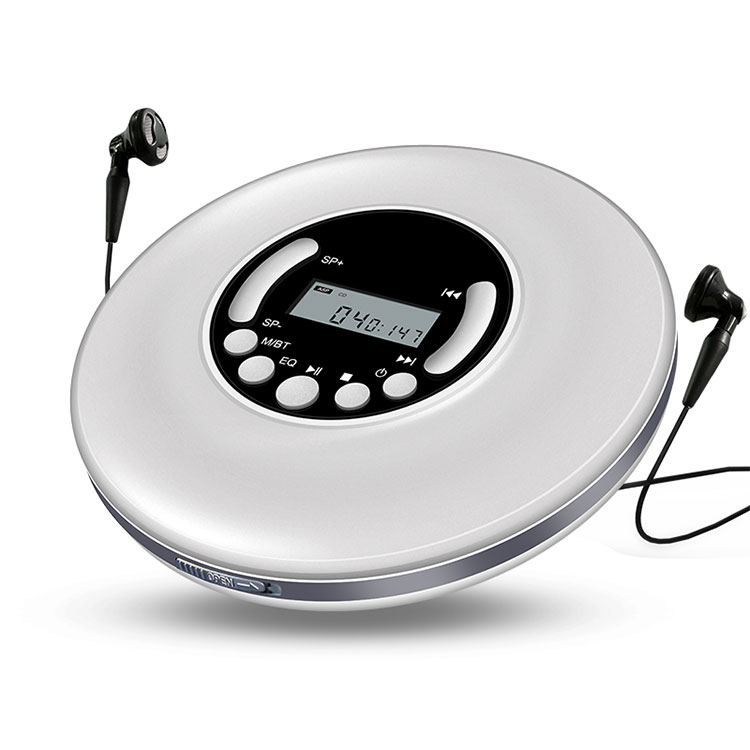

A portable CD player is only as useful as its battery. The audio quality may be excellent, the anti-skip protection may be advanced, and the design may be sleek, but if the battery dies after two hours, the device is impractical for commuting, travel, or outdoor use. For buyers sourcing portable CD players for retail, gifting, or educational markets, battery performance is one of the most important practical specifications. It determines how long the user can listen without recharging or replacing batteries, how much the device costs to operate, and how satisfied the customer will be with the product. A CD player with poor battery performance will generate returns and complaints. A CD player with well-matched battery and power consumption will become a reliable daily companion.
This guide is written for procurement managers who need to understand how battery performance affects the practical use of a portable CD player. We will explain the battery types used in portable CD players, the relationship between battery capacity and playback time, the factors that affect power consumption, the trade-offs between battery life and other features, and the criteria for evaluating a supplier. We will also provide detailed product parameters from our factory at Shenzhen Yiruiyoupin Technology Co., Ltd. Whether you are sourcing CD players for a retail chain, a promotional campaign, or an educational program, this guide will help you select a device that delivers practical battery performance.
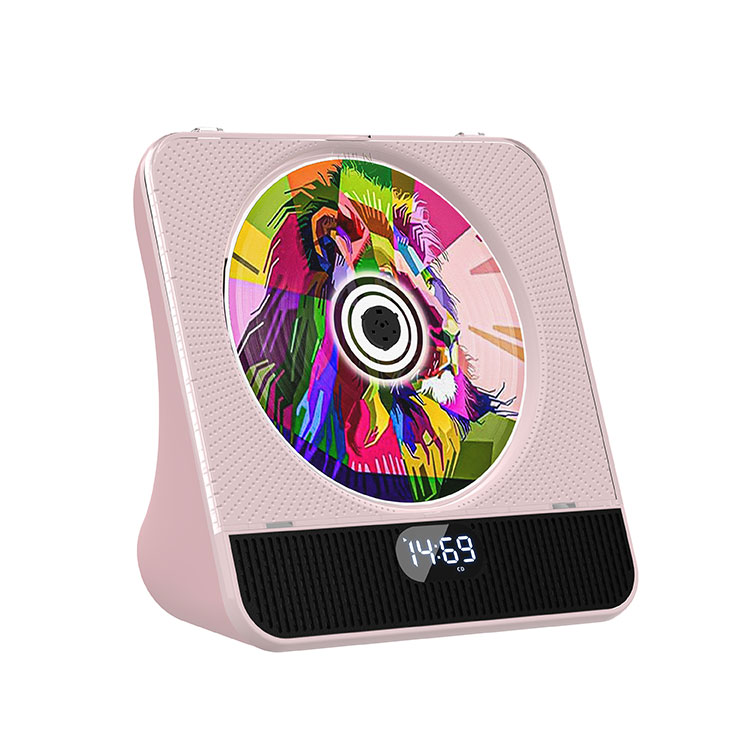
Portable CD players use two main types of batteries: disposable alkaline batteries and rechargeable batteries. Disposable alkaline batteries are the traditional choice. They are widely available, inexpensive, and do not require a charging circuit. However, they must be replaced regularly, which adds to the operating cost and creates waste. Rechargeable batteries, typically lithium-ion or nickel-metal hydride, are built into the device or supplied as a separate pack. They can be recharged hundreds of times, reducing the operating cost and the environmental impact. The choice between the two types affects the player's weight, size, cost, and convenience. The table below compares the two battery types.
| Feature | Alkaline Battery | Rechargeable Battery |
| Type | Disposable | Lithium-ion or NiMH |
| Initial Cost | Low | Higher |
| Operating Cost | High (replacement) | Low (rechargeable) |
| Convenience | Replace when depleted | Recharge when depleted |
| Environmental Impact | Higher (disposal) | Lower (reusable) |
| Weight | Heavier | Lighter |
At Shenzhen Yiruiyoupin Technology Co., Ltd., our factory manufactures portable CD players that support both alkaline and rechargeable battery options. We design the battery compartment to accept standard AA batteries and offer an optional rechargeable pack. Our goal is to provide our customers with flexible battery options that suit different market preferences.
The playback time of a portable CD player is calculated by dividing the battery capacity by the power consumption of the player. Battery capacity is measured in milliampere-hours (mAh) for rechargeable batteries or in ampere-hours (Ah) for larger batteries. Power consumption is measured in watts (W) or milliwatts (mW). The formula is: Playback Time (hours) = Battery Capacity (Wh) / Power Consumption (W). For example, a rechargeable battery with a capacity of 3.7V and 1,200mAh has an energy capacity of 4.44Wh. If the CD player consumes 0.5W, the playback time is approximately 8.9 hours. The table below provides examples of playback time for different battery capacities and power consumption levels.
| Battery Capacity (Wh) | Power Consumption (W) | Playback Time (hours) |
| 2.0 | 0.3 | 6.7 |
| 2.0 | 0.5 | 4.0 |
| 4.4 | 0.3 | 14.7 |
| 4.4 | 0.5 | 8.9 |
| 7.4 | 0.5 | 14.8 |
| 7.4 | 0.8 | 9.3 |
At our factory, we provide playback time specifications for every portable CD player we manufacture. We measure the actual power consumption under typical listening conditions and calculate the playback time for the recommended battery. Our goal is to provide our customers with accurate performance data that they can use in their product listings and marketing materials.
Several factors increase the power consumption of a portable CD player, reducing the playback time for a given battery capacity. The first is the anti-skip buffer. The anti-skip system uses memory and a processor to buffer the audio data, which consumes additional power. The larger the buffer, the more power is consumed. The second is the headphone output level. Higher volume levels require more power from the amplifier. The third is the backlight on the LCD display. If the display is backlit, it consumes power whenever it is on. The fourth is the motor that spins the CD. The motor consumes power continuously during playback, and its consumption increases if the disc is unbalanced or if the player is subjected to vibration. The fifth is the type of headphones used. High-impedance headphones require more power to drive than low-impedance headphones. The table below summarizes these factors.
| Factor | Effect on Power Consumption | Mitigation |
| Anti-Skip Buffer | Increases power use | Select a player with an efficient buffer |
| Headphone Volume | Higher volume = more power | Use efficient headphones, moderate volume |
| LCD Backlight | Consumes power when on | Turn off backlight when not needed |
| Disc Motor | Continuous power draw | Use balanced discs, avoid vibration |
| Headphone Impedance | Higher impedance = more power | Use low-impedance headphones |
At Shenzhen Yiruiyoupin Technology Co., Ltd., our factory designs our portable CD players to minimize power consumption without compromising performance. We use efficient anti-skip buffers, low-power LCD displays, and energy-efficient motors. We also provide guidance on headphone selection to help our customers achieve the best battery life. Our goal is to deliver practical battery performance for everyday use.
Battery performance has a direct and significant effect on the user experience of a portable CD player. The most obvious effect is listening time. A player that delivers 20 hours of playback on a single charge or set of batteries allows the user to listen throughout a long commute, a day at the beach, or a weekend camping trip. A player that delivers only 4 hours requires frequent recharging or battery replacement, which is inconvenient and frustrating. The second effect is operating cost. A player that uses disposable batteries incurs a recurring cost, while a rechargeable player has a lower operating cost. The third effect is portability. A player that requires frequent battery changes may need to carry spare batteries, which adds weight and bulk. The fourth effect is reliability. A player with a well-designed power circuit and a stable battery connection is less likely to experience dropouts or unexpected shutdowns. The table below summarizes these effects.
| Effect | Impact on User Experience | Recommended Specification |
| Listening Time | Longer time = more convenience | At least 10 hours per charge |
| Operating Cost | Lower cost = better value | Rechargeable battery option |
| Portability | Fewer spare batteries needed | Long battery life, rechargeable |
| Reliability | Stable power = fewer dropouts | Well-designed power circuit |
At our factory, we design our portable CD players with the user experience in mind. We specify batteries that provide at least 10 hours of playback, and we offer rechargeable options for lower operating cost. We also design the battery compartment for easy access and secure connection. Our goal is to provide our customers with CD players that deliver a positive user experience.
Designing a portable CD player involves trade-offs between battery life and other features. A larger battery provides longer playback time, but it adds weight and size to the player. A more powerful anti-skip buffer provides better protection against skipping, but it consumes more power and reduces playback time. A brighter backlit display is easier to read in low light, but it consumes more power. A higher maximum volume provides more flexibility, but it drains the battery faster. The table below summarizes these trade-offs.
| Feature | Benefit | Trade-Off |
| Larger Battery | Longer playback time | More weight and size |
| Larger Anti-Skip Buffer | Better skip protection | Higher power consumption |
| Backlit LCD | Easier to read in low light | Higher power consumption |
| Higher Max Volume | More flexibility | Faster battery drain |
At Shenzhen Yiruiyoupin Technology Co., Ltd., our factory balances these trade-offs to deliver products that meet the practical needs of our customers. We offer a range of models with different battery capacities and feature sets, so that buyers can choose the configuration that best suits their market. Our engineering team can help you evaluate the trade-offs for your specific application.
Evaluating a supplier of portable CD players requires a focus on battery performance data, power management design, manufacturing quality, and technical support. The supplier must provide accurate playback time specifications based on measured power consumption. They must have a well-designed power circuit that minimizes consumption and maintains stable operation. They must manufacture to high standards of quality, with reliable battery contacts and durable components. And they must provide technical support to help you select the right model for your market. The table below summarizes the evaluation criteria.
| Evaluation Criterion | What to Look For | Why It Matters |
| Battery Performance Data | Measured playback time, power consumption | Enables accurate product specification |
| Power Management Design | Efficient circuit, low standby drain | Ensures long battery life |
| Manufacturing Quality | Reliable battery contacts, durable components | Ensures consistent performance |
| Technical Support | Battery selection, power analysis | Helps optimize the product |
| Project Experience | Retail, promotional, educational references | Demonstrates capability and reliability |
At our factory, we have been producing portable CD players for over a decade. We provide measured battery performance data for every model, and we design our power circuits for efficiency and stability. Our technical team is available to assist with battery selection and power analysis. We invite you to evaluate us against these criteria and to consider us as your partner for portable CD players.
The following table provides the key product parameters for our portable CD players. These players are designed for retail, promotional, and educational markets, with battery performance that supports practical daily use. Our factory can also produce custom models to meet specific requirements.
| Parameter | Specification Range | Notes |
| Battery Type | 2 x AA alkaline or rechargeable | Optional built-in rechargeable pack |
| Battery Capacity | 2,000 - 2,500 mAh (AA) | Depends on battery brand |
| Power Consumption | 0.3 - 0.5 W | Typical listening conditions |
| Playback Time | 10 - 20 hours | Depends on battery and volume |
| Anti-Skip Buffer | 40 - 120 seconds | Larger buffer for active use |
| Display | LCD with optional backlight | Backlight increases power use |
| Headphone Output | 3.5mm stereo | Low-impedance headphones recommended |
| Dimensions | Compact, portable | Selected for portability |
| MOQ | 500 pieces | Negotiable for large orders |
| Lead Time | 3 - 5 weeks | Depends on quantity and customization |
At our factory, we manufacture our portable CD players to meet these specifications and more. We can customize the battery type, playback time, anti-skip buffer, and display to suit your specific requirements. Our quality control system includes inspection of raw materials, in-process inspection, and final inspection before shipment. Our goal is to provide our customers with high-quality portable CD players that deliver practical battery performance.
Question 1: How long does a portable CD player last on a set of batteries?
Answer: The playback time depends on the battery capacity and the power consumption of the player. A typical portable CD player using two AA alkaline batteries (approximately 2,000-2,500 mAh) consumes 0.3-0.5W and delivers 10-20 hours of playback. Rechargeable batteries with higher capacity can deliver longer playback. Our factory provides measured playback time data for every model we manufacture.
Question 2: Is it better to use disposable or rechargeable batteries in a portable CD player?
Answer: The choice depends on the user's priorities. Disposable alkaline batteries are convenient and widely available, but they have a higher operating cost and a greater environmental impact. Rechargeable batteries have a higher initial cost but a lower operating cost and a lower environmental impact. Many of our portable CD players support both options, allowing the user to choose.
Question 3: What reduces the battery life of a portable CD player?
Answer: Several factors reduce battery life: high volume levels, the anti-skip buffer, the LCD backlight, unbalanced discs that cause the motor to work harder, and high-impedance headphones that require more power. Using efficient headphones, moderate volume, and turning off the backlight when not needed can extend battery life.
Question 4: Can I use rechargeable batteries in a CD player designed for alkaline batteries?
Answer: In most cases, yes. Rechargeable AA batteries have a lower nominal voltage (1.2V) than alkaline batteries (1.5V), but most portable CD players are designed to operate across a range of voltages. However, the playback time may be shorter with rechargeable batteries because of the lower voltage. Check the player's specifications to confirm compatibility.
Question 5: How do I choose the right portable CD player for my market?
Answer: Consider the intended use and the target customer. For commuters and travelers, choose a player with long battery life and a large anti-skip buffer. For promotional gifts, choose a compact, lightweight player with a moderate battery life. For educational use, choose a durable player with a rechargeable battery option. Our team can help you select the right model for your market.
Battery performance is a critical factor in the practical use of a portable CD player. It determines how long the user can listen, how much the device costs to operate, and how satisfied the customer will be with the product. By understanding the battery types, the relationship between battery capacity and playback time, the factors that increase power consumption, and the trade-offs between battery life and other features, buyers can select a CD player that delivers practical performance for their market. At Shenzhen Yiruiyoupin Technology Co., Ltd., our factory manufactures portable CD players with measured battery performance data, efficient power management, and flexible battery options.
Whether you are sourcing CD players for a retail chain, a promotional campaign, or an educational program, we invite you to contact us to discuss your requirements. We can provide samples, battery performance data, and customized solutions. Our commitment to quality and customer satisfaction has made us a trusted partner for portable audio buyers around the world.
Contact Shenzhen Yiruiyoupin Technology Co., Ltd. today to discuss your portable CD player requirements and discover how our products can deliver the battery performance your customers need.
-