# Advantages of DVB-T2 Compared to DVB-T, ATSC, ISDB-T, DVB-C
## 1. Far Higher Spectral Efficiency (Core Biggest Advantage)
DVB-T2 uses advanced modulation, LDPC error correction and frame structure:
- Up to **50% more data capacity** than the old DVB-T standard on the same frequency bandwidth (8MHz channel).
- One 8MHz multiplex can carry **10–15 HD channels (H.265)** vs only 3–4 HD on DVB-T.
- Saves national broadcast spectrum; governments can allocate extra frequencies for mobile services.
## 2. Stronger Signal Reception & Better Coverage
- Robust LDPC+BCH double error correction code, far more resilient against noise, multipath interference, weak signals.
- Better performance in mountainous, suburban, urban high-rise areas with signal reflections.
- Longer transmission distance from single tower; wider national coverage with fewer transmitters.
- Works well with small indoor antennas, unlike older standards that require large outdoor aerials.
## 3. Flexible Modulation & Bandwidth Support
Supports multiple bandwidths: 5/6/7/8 MHz (fits Europe, Africa, Malaysia, Southeast Asia frequency plans).
Modulation options: QPSK, 16QAM, 64QAM, 256QAM, allowing broadcasters to balance coverage range vs channel capacity.
## 4. Native Support for H.265/HEVC High-Efficiency Video
DVB-T2 was designed for modern compression:
- H.265 cuts video bitrate by ~50% vs H.264 for the same 1080P HD quality.
- Enables more free HD FTA channels without extra spectrum cost.
- Older DVB-T mostly limited to H.264 only, cannot fit many HD streams.
## 5. Advanced Built-in Functional Features
- Native support for PVR recording, time shift, EPG, multi-language subtitles, multi-audio tracks.
- Standardized OTA (over-the-air) firmware upgrade for set-top boxes via broadcast signal.
- Supports HbbTV interactive TV services (catch-up, news, streaming hybrid broadcast).
- RF loop-through standard on most DVB-T2 STBs for second TV connection.
## 6. Lower Power Consumption for Receivers
Optimized tuner and decoding chips reduce standby & working power of DVB-T2 STBs, better for rural households with limited electricity.
## 7. Superior Mobility & Portable Reception
Great for moving signals (cars, buses):
- Better Doppler shift resistance vs DVB-T and ISDB-T.
- Stable TV playback on vehicle-mounted DVB-T2 receivers.
## 8. Global Wide Adoption & Mature Ecosystem
- Dominant standard across Europe, Africa, Malaysia, Southeast Asia, Middle East.
- Mass production of cheap, widely available DVB-T2 STBs, antennas, TV mainboards.
- Full local certification support (SIRIM in Malaysia, CE for Europe) with huge OEM/ODM supply chains.
- Large spare parts, firmware, after-sales support compared to regional standards like ATSC (US only) or ISDB-T (Japan/Brazil).
## 9. Future Expandability
Ready for UHD 4K broadcast, multi-layer transmission, single-frequency networks (SFN) for nationwide uniform coverage without frequency interference.
# Quick Comparison vs Competing Standards
1. **DVB-T (old terrestrial)**
+ DVB-T2: 50% higher capacity, weaker signal tolerance, H.265 ready
2. **ATSC 1.0 (USA, Canada)**
+ DVB-T2 better coverage, lower cost decoders, global supply chain
3. **ISDB-T (Japan, Latin America)**
+ DVB-T2 higher channel capacity, better for large-scale national FTA networks
4. **DVB-C (cable TV)**
+ DVB-T2 no cable wiring cost; zero monthly subscription for FTA terrestrial channels
## Short Sales Version (For Product Listing)
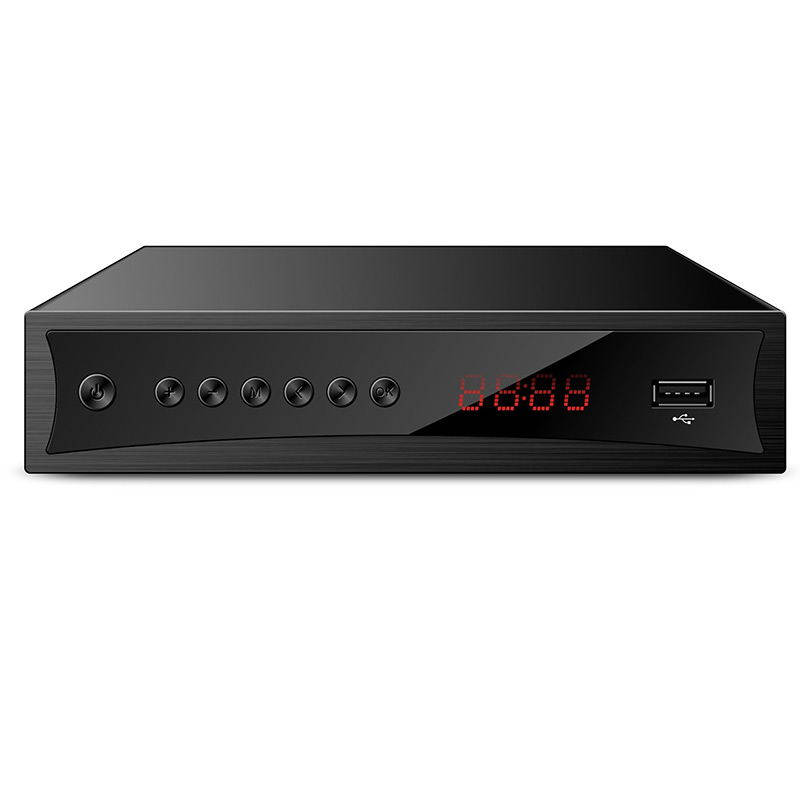
- Higher channel capacity, more free HD channels per frequency
- Stronger weak signal reception for rural & mountain areas
- Full H.265 HEVC support for sharp 1080P HD
- Wider global adoption, affordable SIRIM-certified STBs for Malaysia myFreeview
- Built-in OTA upgrade, USB PVR recording & time shift
- Stable signal for indoor small antennas, low power consumption
Why Is the Portable CD Player Still the Top Choice for Music Lovers in 2026?
DVB-T2 Market Trend in Malaysia (2026 myFreeview / MYTV)
WhatsApp
Leo ho
E-mail
Yiruiyoupin